


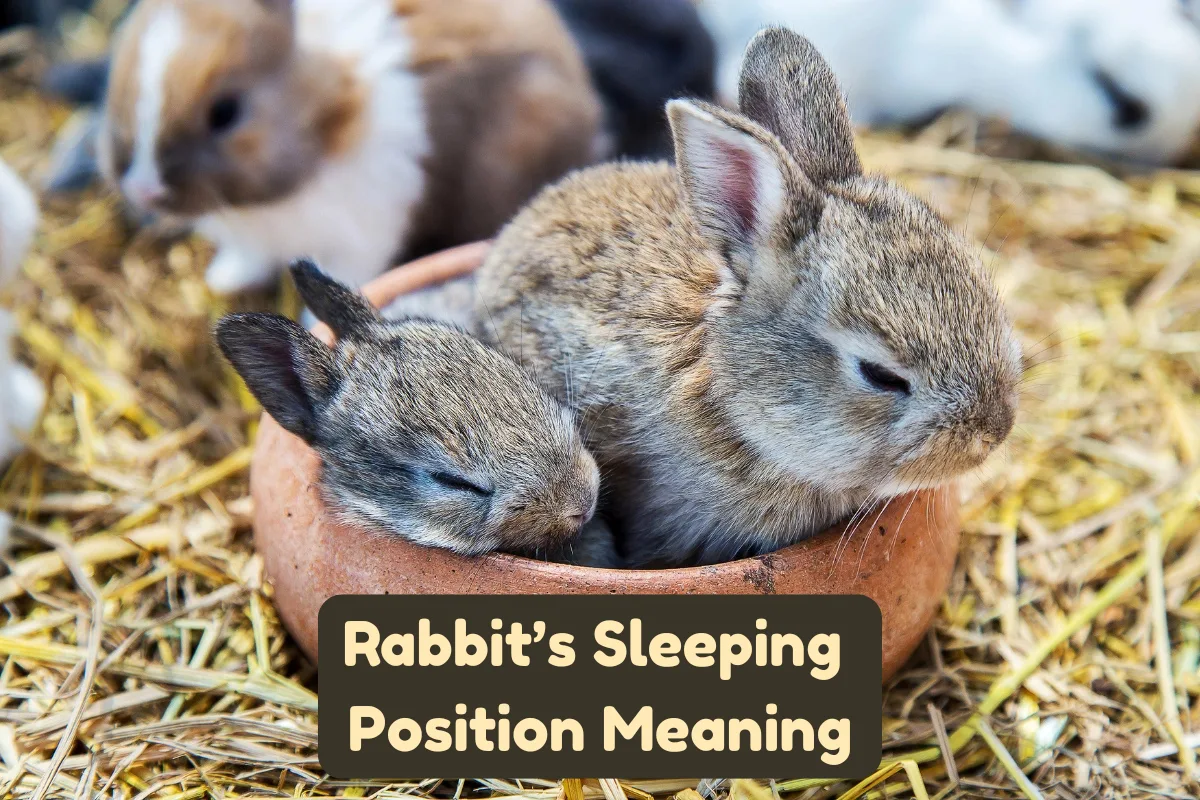
Just like humans, bunnies have different ways of resting, and each position can tell you something about their health, personality, and how comfortable they feel in their environment.
Here’s a breakdown of some common rabbit sleeping positions and what they mean.
The Loaf: Calm, But Cautious
What It Looks Like:
Your rabbit tucks all four legs under their body, rounds their back, lowers their head slightly, and relaxes their ears. From above, they look like a cozy loaf of bread.
What It Means:
This is your rabbit’s default “I’m resting, but I’m aware” position. They’re relaxed enough to sit still and rest, but they’re keeping their limbs tucked and posture tight so they can leap up if needed. It’s also a heat-conserving position, which is especially common on cool floors or in air-conditioned rooms.
Many rabbits will keep their eyes partly open in this position, using their third eyelid to blink and monitor surroundings even while dozing. They’re not asleep in the deepest sense—but they’re not tense either.
When You’ll See It:
- During the day while you’re home and moving about
- In semi-busy spaces where your rabbit feels comfortable but still aware
- In cooler temperatures as a way to stay warm
The Flop: Ultimate Trust
What It Looks Like:
Your rabbit suddenly rolls onto their side, stretches out their legs, and becomes completely limp. Their eyes might be closed, and they may stay like this for minutes to hours.
What It Means:
This is a huge compliment. A flopped rabbit is one that feels 100% safe, physically comfortable, and mentally secure in its space. This position leaves them fully exposed and unable to react quickly, so they only do it when they trust that no harm will come to them. Some may even enter a dreaming state, complete with twitching limbs or soft snoring.
When You’ll See It:
- After a high-energy play session or zoomies
- In the late evening after a full day of activity
- After eating a big meal when fully content and sleepy
✅ Note for new rabbit owners: The flop can be dramatic and make it look like your rabbit collapsed or died—but it’s usually a sign of absolute peace and deep rest.
The Sprawl (Superman): Cooling Down in Style
What It Looks Like:
Your rabbit lies on their belly with their front legs stretched forward and back legs extended behind or out to the side, like a flying superhero.
What It Means:
This position shows that your rabbit is in a state of physical ease, but still in light rest—not deep sleep like a full flop. It also serves a practical purpose: by flattening their body, they increase contact with the floor to cool down. Rabbits will often choose this pose on tiles or shaded areas when they’re a little warm.
Energetic or young rabbits tend to favor this pose, as it allows them to spring up quickly if startled.
When You’ll See It:
- On warm days, especially on cooler surfaces
- After a good play session or bunny zoomies
- In bunnies that feel safe but still like to stay semi-alert
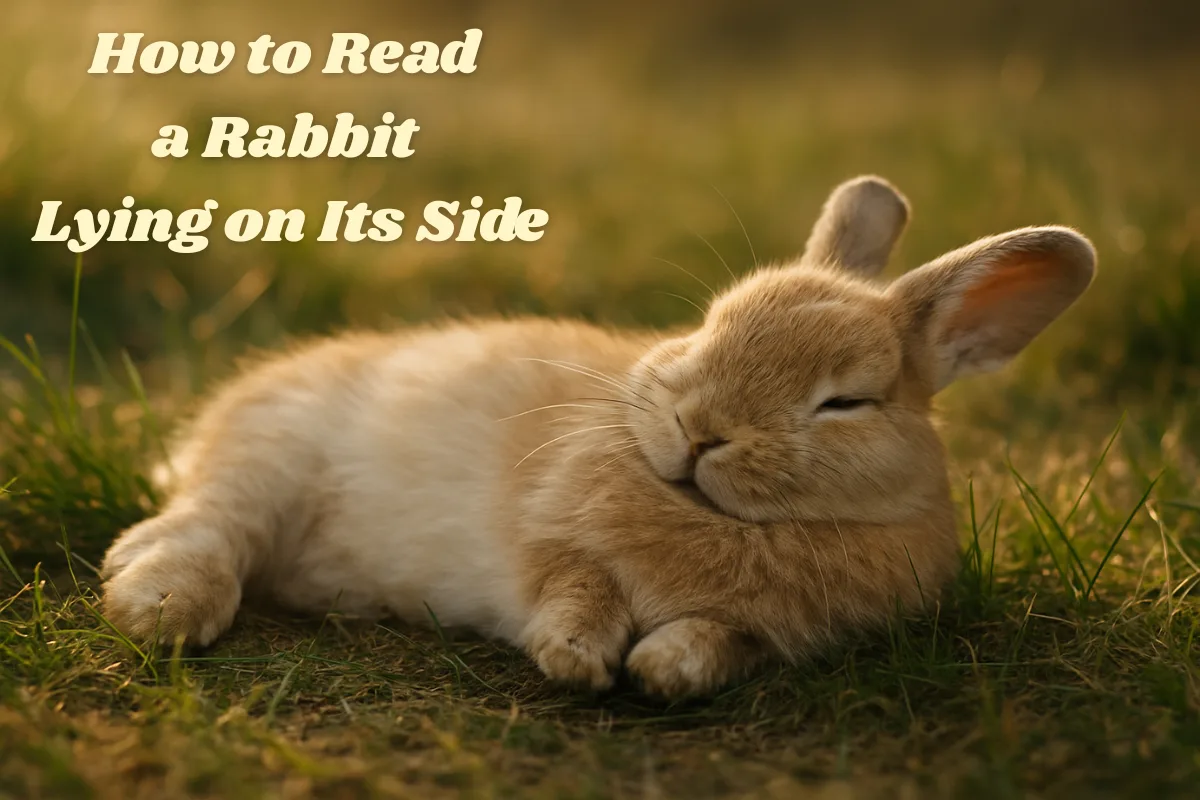
Side-Sleep: Deep, Confident Rest
What It Looks Like:
Your rabbit lies on their side with slightly bent limbs. Their body looks soft and relaxed, but not as dramatically limp as a flop.
What It Means:
This is a deep, restful sleep pose that shows your rabbit is totally at ease. Unlike the loaf or sphinx positions, this pose means your bunny has fully disengaged from their surroundings. They are not bracing themselves for movement—just enjoying a solid nap.
Because this pose makes quick escape harder, rabbits only choose it in environments where they feel very secure.
When You’ll See It:
- In quiet, familiar areas
- During naptime in the mid-morning or afternoon
- When lying beside bonded companions or favorite humans
The Bunny Ball: Seeking Warmth and Comfort
What It Looks Like:
Your rabbit curls into a tight ball, tucking their paws and nose beneath their body, and sometimes wrapping their ears back or around their face.
What It Means:
This classic self-warming pose is mostly used for conserving body heat. It’s common in cooler rooms or on winter mornings. It also signals your rabbit is winding down but still wants a little extra insulation and protection.
In some cases, it can also be a go-to comfort position if your rabbit is a little anxious or recovering from a busy day.
When You’ll See It:
- In cooler environments or winter months
- When your rabbit is sleeping in an open area
- Occasionally after grooming or nesting behaviors
The Half-Flop: Testing the Waters
What It Looks Like:
Your rabbit lays partly on their side, with front legs tucked or straight and back legs stretched behind, but their upper body remains semi-upright.
What It Means:
Think of this as a transitional state between loafing and full flopping. Your rabbit is very relaxed but hasn’t fully let their guard down yet. It may also be a resting pose between naps or a way to stretch out after grooming.
When You’ll See It:
- During cooldown periods after active play
- In spaces where your rabbit feels semi-secure but is still cautious
- When gradually relaxing for a longer sleep
Sitting or Semi-Sitting: On Guard Rest
What It Looks Like:
Your rabbit sits upright or in a crouch, sometimes resting their weight on their hindquarters with forepaws down and alert ears.
What It Means:
This is a “just-in-case” resting pose—your rabbit is not asleep, but they are pausing between activities. They’re ready to bolt if needed, and they often use this posture in unfamiliar surroundings or near unfamiliar sounds.
When You’ll See It:
- In new environments or with visitors present
- When there’s noise in the home (vacuum, doorbell, etc.)
- If your rabbit is unsure about another animal nearby
Back-to-Back Sleeping: The Bonded Bunny Signal
What It Looks Like:
Two rabbits lie side-by-side or back-to-back, often touching or pressing their bodies together while sleeping.
What It Means:
This is one of the strongest signs of bonding and mutual trust. It mimics wild behavior where rabbits huddle for warmth and security in groups. It also reinforces social bonds through proximity and scent.
If your rabbit sleeps against you, they’re expressing trust and viewing you as part of their social group.
When You’ll See It:
- In bonded pairs or trios
- After grooming or during shared naps
- With humans they trust and feel safe around
Bonus: Sleeping with Eyes Open – Survival Mode, Still at Rest
Rabbits can and often do sleep with their eyes open. Their third eyelid lets them rest while still keeping an eye out for potential threats.
How to Tell They’re Asleep:
- Their nose stops twitching or moves slowly
- Breathing becomes slower and deeper
- Whiskers or ears may gently flick
- They may twitch slightly—yep, rabbits dream!
Closed eyes mean they’re in deep sleep and fully trust their surroundings.
When to Worry About Sleep Behavior
While most rabbit sleep poses are completely normal, it’s important to stay alert to subtle changes that may indicate health issues.
Contact your vet if your rabbit:
- Remains lethargic even during usual active periods
- Refuses food or water after waking
- Has noisy, rapid, or labored breathing
- Stays hunched or pressed into the floor for long periods
- Shows signs of pain like teeth grinding, narrowed eyes, or hiding behavior
Your rabbit’s sleeping position can reveal a lot about their emotions and how they perceive their environment. Pay attention to your bunny’s sleeping habits, and you’ll learn even more about their unique personality and health.