


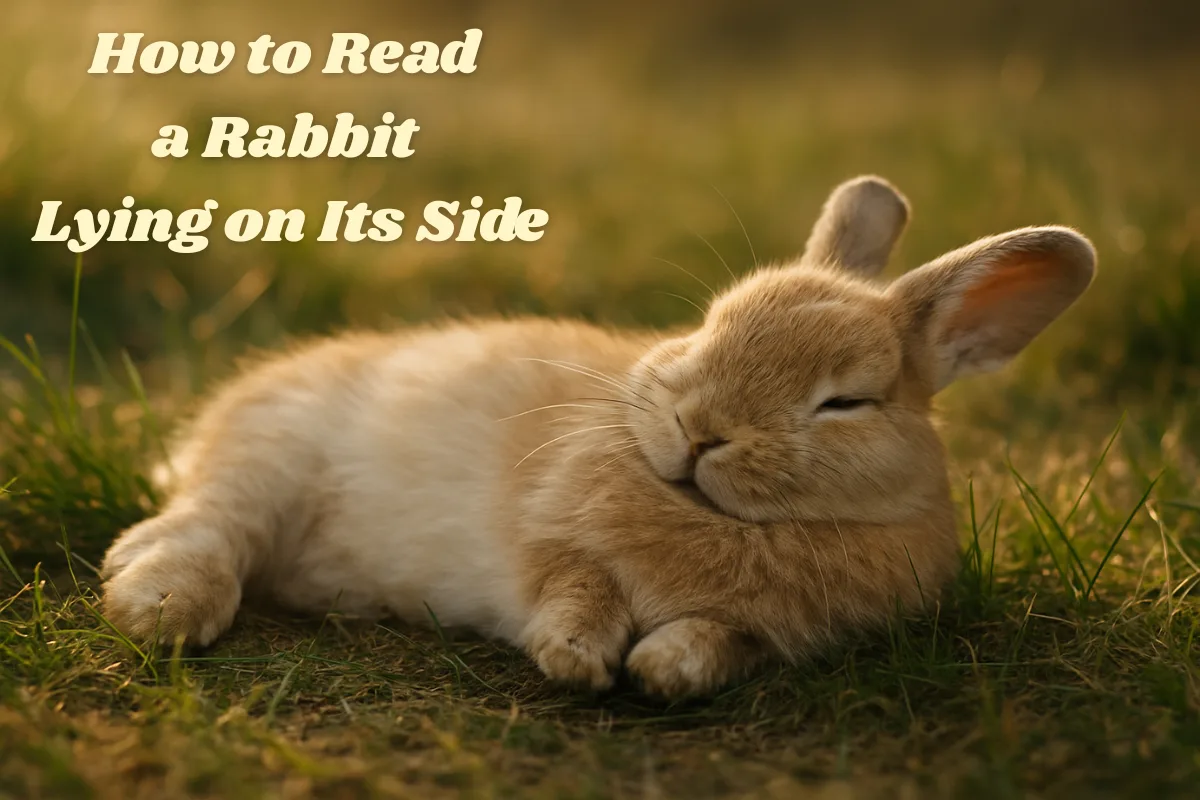
When you glance into the pen and see your bunny stretched out on its flank, two wildly different thoughts may race through your mind:
- Aww, look at that sleepy loaf!
- Wait—are they okay?
Rabbits are both prey animals and dramatic nappers—they might flop over like they’ve passed out, then bolt upright a second later. That’s why it can be hard to tell the difference between a peaceful nap and a real emergency.
Why Do Rabbits Lie on Their Side?
If you’ve ever seen your rabbit roll onto its side with dramatic flair and sprawl out like a fuzzy pancake, you’ve witnessed the famous “flop.”
What Is a Flop?
A flop is a deliberate, quick roll onto one hip or shoulder, often followed by a stretch of the hind legs or even a playful kick. Many owners call it “the dramatic flop” because of how sudden—and adorable—it looks.
What It Means
- Deep relaxation: A rabbit will only flop when it feels completely safe. In the wild, exposing the belly is risky—so if your bunny flops near you, it’s showing total trust.
- Cooling down: Sprawling on tile, wood, or shaded areas helps rabbits regulate body temperature, especially after activity or in warm weather.
- Post-zoomie recovery: After a flurry of sprints or jumps, a flop lets tired muscles fully relax.
What It Looks (and Feels) Like
- Eyes: Half-closed or softly lidded, sometimes blinking slowly
- Whiskers: Neutral, not twitching or pulled tight
- Ears: Loosely angled to the sides or gently drooping
- Breathing: Steady and shallow, about 8–12 rises per 15 seconds (equal to 30–60 breaths per minute)
- Limbs: Fully limp and relaxed—if you gently touch a paw, there’s no resistance
If your rabbit flops in front of you, take it as a compliment: they trust you enough to be completely vulnerable.
Source: rabbit.org
Red-Flag Variations That Mimic a Care-Free Flop
Not every bunny stretched out on its side is just napping. Some positions mimic the classic flop but are silent signals of pain, illness, or distress. If something feels off, look closer—what seems like a lazy sprawl could be a medical emergency in disguise.
1. Sternal Collapse (The “Pancake” Flatten-Out)
This posture looks like your rabbit has melted into the floor—chest and chin flat, forelegs tucked tightly under the body, and an overall compressed, tense look. Rapid nostril flaring may be visible.
🚫 Why it’s a red flag: This is often a sign of respiratory distress, heart strain, or severe abdominal pain.
✅ What to do: Count your rabbit’s breathing—anything over 120 breaths/min at rest is concerning. Check gum color (healthy = pink). If breathing remains fast or gums look pale or blue, call your vet.
2. Side Sprawl with Head Thrown Back
Instead of resting naturally, the rabbit’s neck arches backward, nose points upward, and the mouth may gape. Jerking or paw paddling may also occur.
🚫 Why it’s a red flag: This suggests heatstroke, seizure, or neurological trauma. A normal flop never involves neck arching or uncontrolled motion.
✅ What to do: Check the ears—if hot and dry, body temperature may be too high. Move your rabbit to a cool room, mist the ears with tepid water, and call your vet right away.
3. Half-Flop, Then Freeze
Your bunny starts to roll but abruptly stops. Legs stay stiff, eyes may bulge, and subtle twitches or a single leg kick may follow.
🚫 Why it’s a red flag: This interrupted flop can signal gas pain, gut stasis, or even organ torsion. Rabbits in abdominal distress often brace or freeze.
✅ What to do: Gently feel the belly—if it’s hard or swollen, call the vet. You can try a light tummy massage or simethicone (only if previously approved), but treat this as urgent.
4. Side-Lie with Shivers
The rabbit appears flopped, but fine tremors ripple through the flanks or thighs. Ears and feet feel noticeably cool.
🚫 Why it’s a red flag: This may indicate hypothermia, shock, or severe GI slowdown—all of which can escalate quickly.
✅ What to do: Wrap your rabbit in a warm fleece and hold them close. If you can, take their temperature—anything below 100 °F means an emergency.
5. Flop into Barrel Roll
It starts like a normal flop, but the rabbit continues rolling or flips onto their back, unable to stabilize. Head tilt or disorientation may follow.
🚫 Why it’s a red flag: This is often caused by vestibular disease, stroke, or toxin exposure, all of which disrupt balance.
✅ What to do: Place your rabbit in a soft, padded box to prevent injury and contact your exotics vet immediately.
6. Limp Stretch with Urine or Stool Dribbling
The rabbit lies limp, and you notice urine or soft stool leaking onto their fur. The hind end feels damp and possibly cold.
🚫 Why it’s a red flag: This posture may signal spinal injury, urinary blockage, or late-stage effects of E. cuniculi, which affects bladder and nerve function.
✅ What to do: Keep your rabbit clean, dry, and warm. Gently check the belly for swelling or bladder pressure and contact a vet without delay.
Source: bunnylady.com, petmd.com, rabbit.org
The 60-Second Safety Check
When in doubt, run through this quick wellness scan:
| Step | What to Check | Normal Range |
|---|---|---|
| Breathing Rate | Count flank rises for 15 seconds × 4 | 30–60 breaths per minute at rest |
| Responsiveness | Call name or touch ears | Mild ear flick, blink, or head shift |
| Ear & Foot Warmth | Touch with inner wrist | Should feel comfortably warm |
| Gum Color | Gently lift lip | Healthy pink—not pale or blue |
| Stomach Feel | Lightly palpate belly | Soft, not hard or distended |
| Recent Poops | Check litter area or corners | At least a few normal pellets present |
First-Response Steps You Can Take at Home
If your rabbit is showing signs of distress while lying on its side, these gentle, supportive actions can help stabilize them while you contact your vet. They’re not a substitute for medical care—but they can buy crucial time.
Create Calm
Dim the lights, reduce sudden noises, and minimize handling. A quiet, low-stress environment helps prevent shock from worsening and keeps your rabbit from using up precious energy.
Adjust Temperature Based on Ear Warmth
- For a chilled bunny:
Wrap your rabbit loosely in a fleece blanket and place a warm (not hot) water bottle near their body—never directly underneath. You can also hold them gently against your chest for shared body heat. - For an overheated bunny:
Move them into a cooler room (68–70 °F). Offer a chilled ceramic tile to lie on and mist their ears lightly with tepid water—never immerse the rabbit in water.
Massage the Belly
If you suspect mild gas buildup (no pooping, slight abdominal tension), use small, circular motions along the belly. Stop immediately if your rabbit shows signs of pain, like flinching or teeth grinding.
Encourage Hydration
Offer fresh, lukewarm water or syringe small amounts if your rabbit is alert. Also try wet leafy greens (like romaine or parsley), which provide hydration and may help stimulate gut movement.
Document Everything
Take note of:
- The time symptoms started
- Any changes in behavior or posture
- Vital signs (breathing rate, ear temp, etc.)
- Steps you’ve taken so far
This information will help your vet assess the urgency and decide on next actions faster.
Bottom Line
A true “happy flop” is marked by limp limbs, calm breathing, warm ears, and a bunny that’s easy to rouse.
If you see anything else—labored breathing, extreme ear temperature, rigid posture, disorientation, or gum discoloration—don’t wait. These are signs of a medical emergency, and in rabbits, time matters. Act within minutes, not hours.