


Ever wondered just how tiny your hamster should be? These adorable pets may be small, but their weight can tell you a lot about their health. From baby hamsters lighter than a cookie to full-grown adults, knowing what the scale should say can help you take better care of your furry friend.
Average Weights of Different Hamster Breeds
Below are the most commonly kept species and their expected adult weights:
| Hamster Breed | Ounces (oz) | Grams (g) | Pounds (lbs) |
|---|---|---|---|
| Syrian Hamster | 3.5 – 7.0 oz | 100 – 200 g | 0.22 – 0.44 lbs |
| Teddy Bear Hamster (Syrian) | 4.2 – 7.0 oz | 120 – 200 g | 0.26 – 0.44 lbs |
| Dwarf Campbell’s Russian | 1.0 – 1.8 oz | 30 – 50 g | 0.07 – 0.11 lbs |
| Russian Dwarf Hamster | 1.0 – 1.8 oz | 30 – 50 g | 0.07 – 0.11 lbs |
| Winter White Dwarf Hamster | 1.0 – 1.6 oz | 30 – 45 g | 0.07 – 0.10 lbs |
| Roborovski Dwarf Hamster | 0.7 – 0.9 oz | 20 – 25 g | 0.04 – 0.06 lbs |
| Chinese Hamster | 1.1 – 1.6 oz | 30 – 45 g | 0.07 – 0.10 lbs |
1. Syrian Hamster (Golden Hamster)
- Weight: 100–200 grams | 3.5–7.0 ounces | 0.22–0.44 pounds
- Description:
Syrian hamsters are the largest and most popular hamster species kept as pets. They are solitary animals and should always be housed alone after about 6–8 weeks of age. Syrians are known for their gentle nature and are generally easy to handle, making them ideal for families or first-time owners. Their size also makes them less fragile compared to dwarf breeds.
2. Teddy Bear Hamster (Long-Haired Syrian Hamster)
- Weight: 120–200 grams | 4.2–7.0 ounces | 0.26–0.44 pounds
- Description:
A variety of Syrian hamster, Teddy Bear hamsters have long, soft fur that gives them a fluffy, cuddly appearance—hence the name. Their coat requires regular grooming to prevent matting. Like all Syrians, they are solitary and must be kept alone. Their larger size and gentle temperament make them popular with children and owners who enjoy handling and interacting with their pets.
3. Dwarf Campbell’s Russian Hamster
- Weight: 30–50 grams | 1.0–1.8 ounces | 0.07–0.11 pounds
- Description:
These small, compact hamsters are known for their sociable nature and can often live in same-sex pairs or small groups if introduced properly. They are more energetic than Syrian hamsters and enjoy exploring tunnels and toys. Due to their small size, they are a bit more delicate and may be trickier for young children to handle.
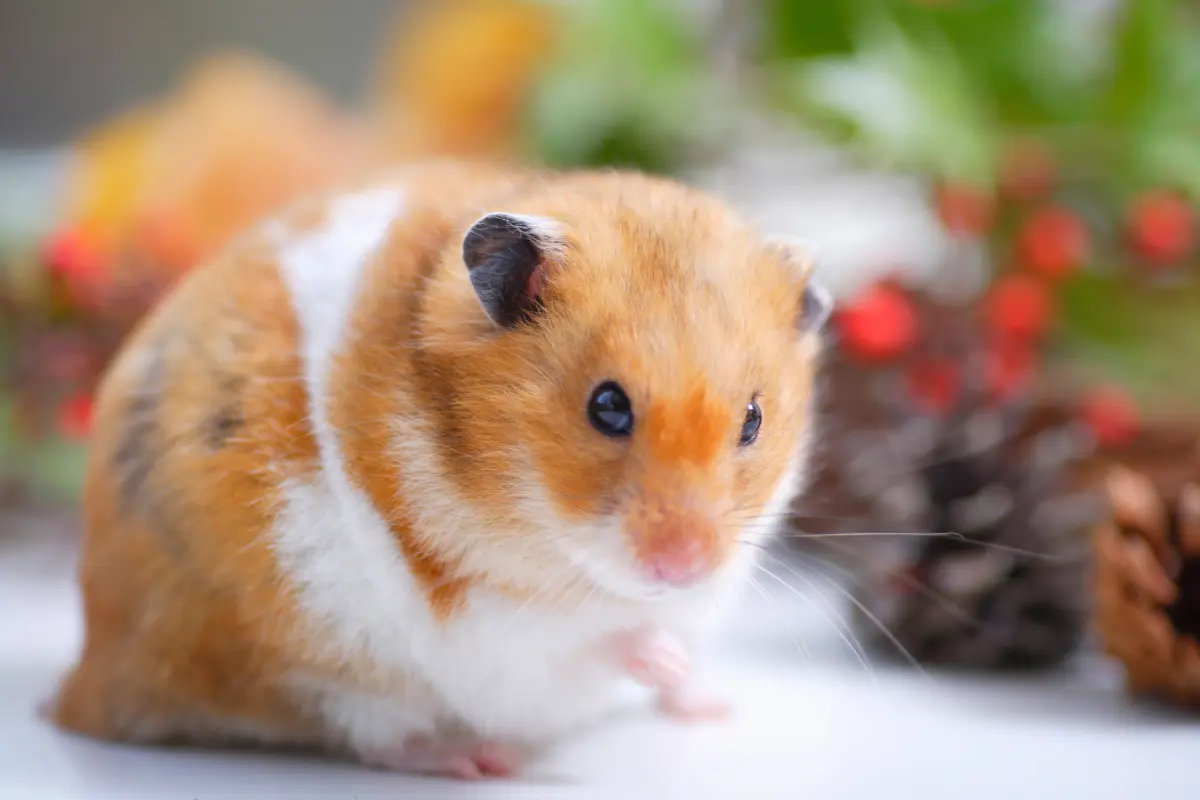
4. Russian Dwarf Hamster (Often confused with Campbell’s)
- Weight: 30–50 grams | 1.0–1.8 ounces | 0.07–0.11 pounds
- Description:
Russian Dwarf hamsters are nearly identical in size and behavior to Campbell’s but are sometimes referred to as hybrids or crosses. They’re curious and social, often thriving in pairs or small groups. They’re highly active and enjoy burrowing, running, and foraging.
5. Winter White Dwarf Hamster
- Weight: 30–45 grams | 1.0–1.6 ounces | 0.07–0.10 pounds
- Description:
Known for their seasonal color change—turning white in colder months—Winter Whites are rounder and slightly smaller than Campbell’s. They are gentle and often tolerate handling well. These hamsters can also live in pairs or small groups if introduced young and monitored carefully.
6. Roborovski Dwarf Hamster
- Weight: 20–25 grams | 0.7–0.9 ounces | 0.04–0.06 pounds
- Description:
Roborovskis are the tiniest and fastest of all hamster breeds. They are incredibly active and love to zip around their enclosure, making them fun to watch. However, due to their speed and small size, they are not ideal for frequent handling. If introduced early and housed in a spacious setup, robos can live in pairs or groups.
7. Chinese Hamste
- Weight: 30–45 grams | 1.1–1.6 ounces | 0.07–0.10 pounds
- Description:
Chinese hamsters have a slender, mouse-like body and a slightly longer tail than other breeds. They are usually calm and easy to tame but can be shy at first. Unlike dwarf species, they are best kept alone as they tend to be more territorial. Once bonded, they can become quite affectionate with their owner.
Hamster Weight by Life Stage: What to Expect
Hamsters go through various stages in their growth cycle, from tiny newborns to fully-grown adults. Understanding their growth pattern and average weight at each stage can help you provide the right care and spot any developmental issues early.
1. Newborn Stage (0–2 Weeks)
Weight: 2–3 grams | 0.07–0.1 ounces | 0.004–0.007 pounds
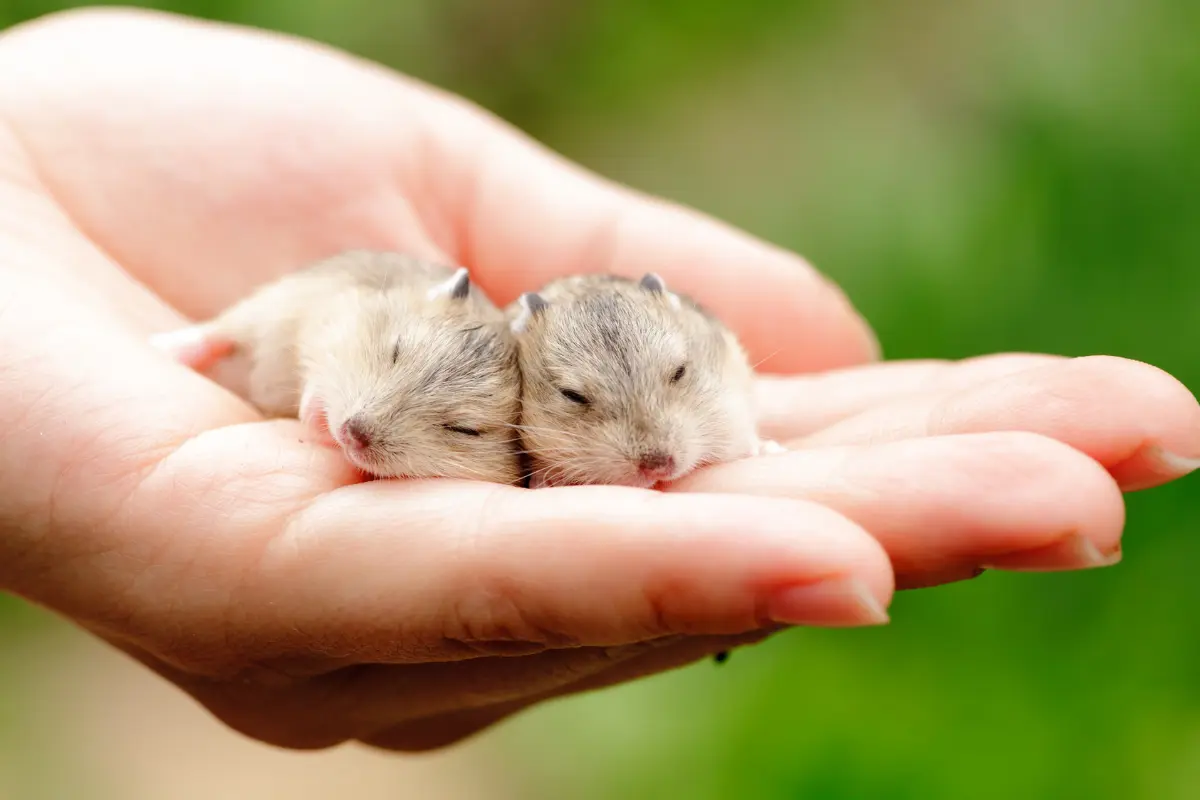
Growth: At birth, hamsters are incredibly tiny, blind, and hairless. Their weight is only a few grams, and they rely entirely on their mother for warmth and nourishment. During this early stage, they grow rapidly, gaining weight as they start to develop their fur and senses. By the end of the second week, they will begin to open their eyes and become more aware of their surroundings.
Important Notes: Pups start eating solid foods and exploring outside the nest. This is a great time to begin gently socializing with your hamster to build trust.
2. Juvenile Stage (2–6 Weeks)
Weight: 8–35 grams | 0.3–1.2 ounces | 0.01–0.08 pounds
Growth: The rapid growth phase occurs during these weeks. At 2 weeks old, pups weigh around 8–15 grams (0.3–0.5 ounces), but by the 4-week mark, they have typically grown to around 20–35 grams (0.7–1.2 ounces), depending on their breed. By the time they are weaned, they can be close to adult size, but they still have some growing to do.
Important Notes: Pups start eating solid foods and exploring outside the nest. This is a great time to begin gently socializing with your hamster to build trust.
3. Adolescent Stage (6–12 Weeks)
Weight:
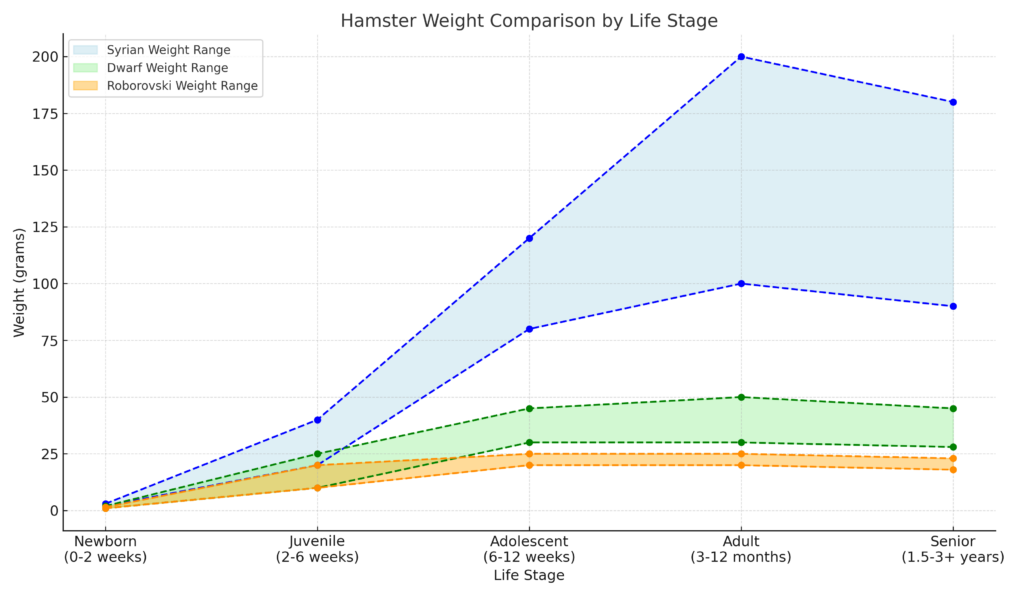
- Syrians: 80–120 grams | 2.8–4.2 ounces | 0.18–0.26 pounds
- Dwarf species: 30–45 grams | 1.1–1.6 ounces | 0.07–0.1 pounds
Growth: Hamsters continue to grow during this stage, reaching about 80% of their adult size by 12 weeks. Their weight and body proportions begin to stabilize, and by the end of the 12 weeks, they are almost fully grown. However, some species, especially Syrians, will continue to add a little more weight as they mature.
Important Notes: During this stage, hamsters become more independent and energetic. They are now sexually mature and can be bred (though this is often discouraged until they are fully grown).
4. Adulthood (3–12 Months)
Weight:
- Syrian Hamster: 120–200 grams | 4.2–7 ounces | 0.26–0.44 pounds
- Dwarf species (Campbell’s, Winter White, Russian): 30–50 grams | 1.0–1.8 ounces | 0.07–0.11 pounds
- Roborovski: 20–25 grams | 0.7–0.9 ounces | 0.04–0.06 pounds
- Chinese: 30–45 grams | 1.1–1.6 ounces | 0.07–0.10 pounds
Growth: At this point, most hamsters have reached their adult weight, though some may continue to fill out slightly. Syrian hamsters will typically weigh between 120–200 grams (4.2–7 ounces), while dwarf hamsters will fall in the 30–50 grams (1–1.8 ounces) range. Their size remains stable throughout adulthood, although weight fluctuations can occur depending on diet, activity levels, and health.
Important Notes: During adulthood, hamsters are at their peak health and energy levels. They are fully mature and should be housed alone (for species like Syrians) to avoid territorial issues.
5. Senior Stage (1.5–3+ Years)
Weight: May experience slight weight loss
Growth: As hamsters age, they tend to lose a little weight. This is a natural part of the aging process as they become less active and their metabolism slows down. Senior hamsters may also experience a reduction in muscle mass, which can affect their overall weight. They might weigh slightly less than in their younger, more active years.
Important Notes: Senior hamsters may need a diet with higher nutritional content to maintain their health. Keep an eye on their health with regular vet checkups.
Factors Influencing a Hamster’s Weight
- Breed: Different species have varying average weights, as outlined above.
- Age: Young hamsters gain weight as they grow, reaching adult weight at about 8 weeks.
- Gender: In some species, females are larger and heavier than males.
- Diet and Exercise: A balanced diet and adequate exercise are crucial for maintaining a healthy weight. Overfeeding or lack of exercise can lead to obesity, while insufficient nutrition can cause underweight issues.
- Health Status: Illnesses, parasites, or dental problems can lead to weight loss. Regular veterinary check-ups are essential to monitor health.
How to Weigh Your Hamster at Home
You don’t need fancy equipment to keep an eye on your hamster’s weight. A digital kitchen scale works perfectly. Here’s how to do it:
- Place your hamster gently on the scale. Make sure the surface is smooth and the hamster is calm to avoid any sudden movements.
- If your hamster is too squirmy, you can place them in a small box or container that can be placed on the scale.
- Record the weight and check periodically to track any changes.
Tip: Offer a treat during or after weighing to keep the experience positive.
What Should You Do if Your Hamster is Overweight or Underweight?
If your hamster is underweight: Make sure your hamster has access to fresh water, a varied diet, and is kept in a stress-free environment. Consider feeding them more protein-rich foods, such as boiled egg or mealworms, to help them gain weight. If you suspect a health problem, it’s crucial to take your hamster to a vet.
If your hamster is overweight: Begin by reducing the number of fatty treats and high-sugar foods. Instead, offer more fresh vegetables and limit the portion sizes of seeds and nuts. Ensure your hamster has regular access to exercise, such as a running wheel or hamster ball. If your hamster does not lose weight, a vet visit may be necessary to rule out underlying health issues.