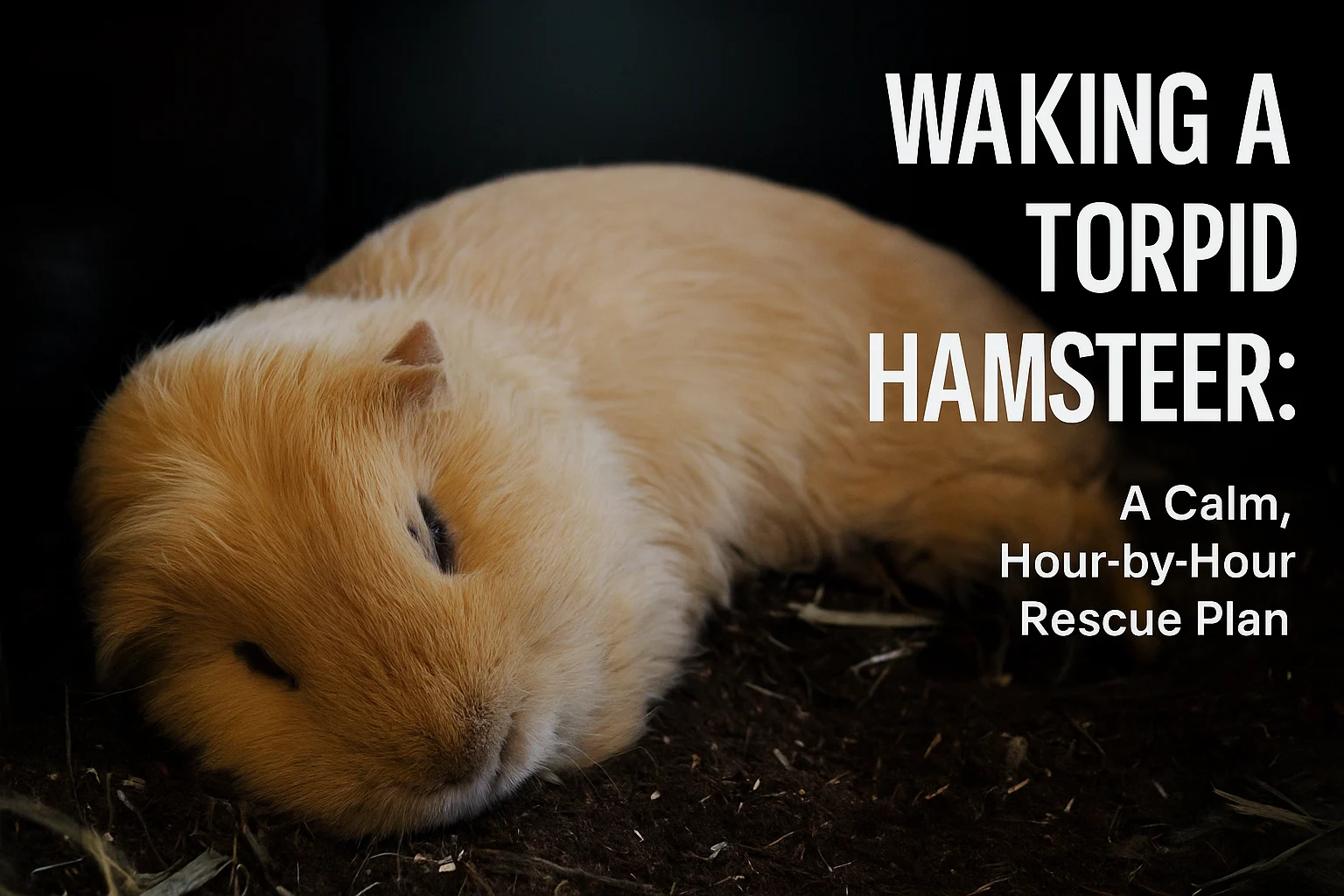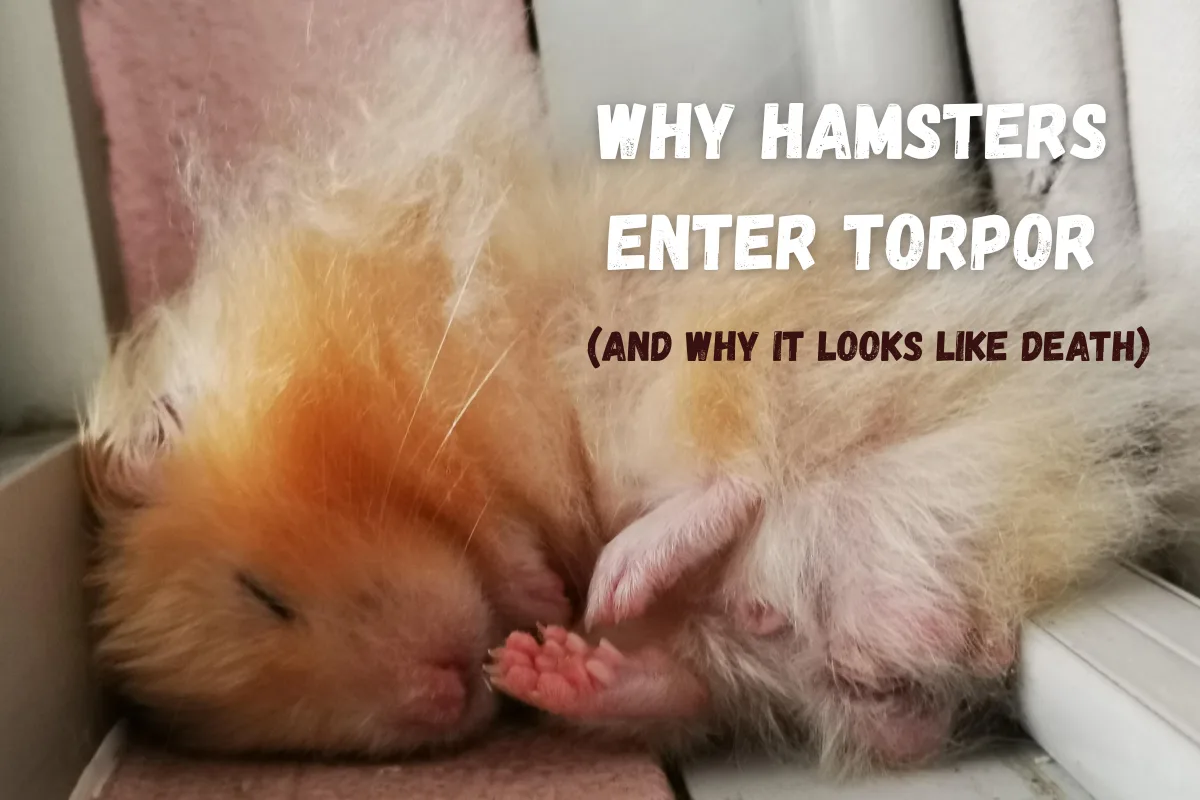



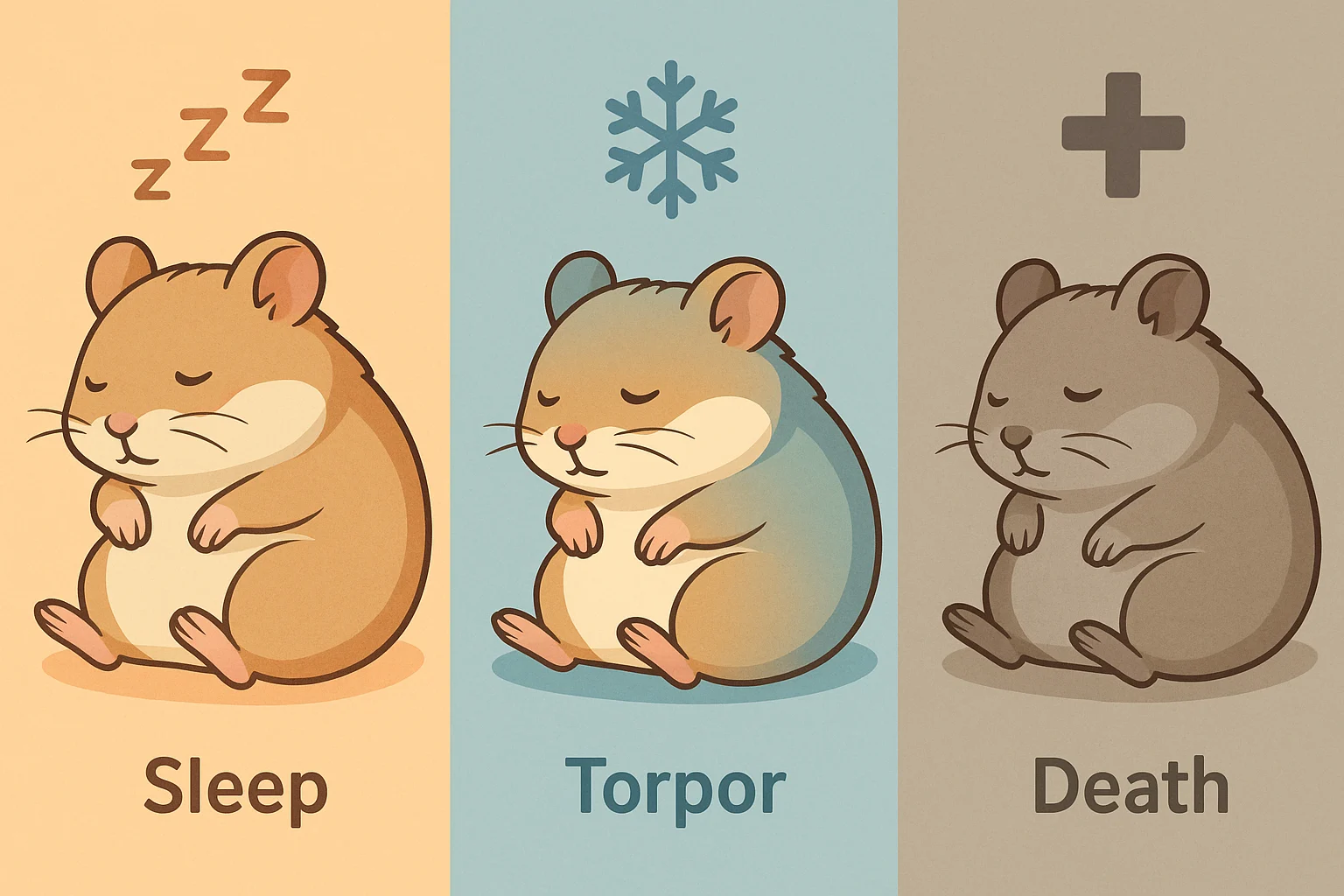
When you discover your hamster cold, motionless, and unresponsive, it can feel like a moment of panic. But don’t rush to conclusions—sometimes, they’re just in a deep sleep, or have entered a temporary state called torpor.
Here’s how to differences between them, and what steps to take if your hamster isn’t responding.
Normal Sleep: Still, Slow… but Safe
Hamsters are nocturnal or crepuscular, meaning they’re most active in the evening and early morning and sleep for long stretches during the day. A deeply sleeping hamster might appear frozen in place, especially if you’re not used to their rest habits.
What to expect during sleep:
- Curled tightly in a nest, hideout, or bedding pocket
- Very slow breathing—sometimes fewer than 20 breaths per minute
- May twitch slightly or stay completely still
- Some may even sleep with eyes partly open (normal for certain breeds)
Despite their eerie stillness, sleeping hamsters are:
- Warm to the touch
- Limp but not stiff
- Responsive to gentle noise or light over time
🚫 Avoid poking or shaking them awake—it can startle or even frighten them. Instead, softly speak nearby, rustle bedding, or dim lights to check.
Torpor: The Survival State That Mimics Death
Torpor is a temporary, life-preserving state that hamsters may enter under stress—especially cold. Unlike true hibernation, which lasts weeks or months, torpor is short-term (usually hours to a few days) and much riskier for domesticated hamsters.
Common triggers:
- Room temperature dropping below 65 °F (18 °C)
- Sudden changes (drafts, outages, lack of food or light)
- Illness or malnutrition, especially when combined with cold
- Shock or severe stress
How to recognize torpor:
- The body feels cold and limp, not stiff
- Breathing slows to as little as 1 breath every 2–3 minutes
- May lie curled or stretched out, completely unresponsive
- Whiskers may twitch under bright light
- Pupils remain constricted, not wide and dilated
- You may detect a faint heartbeat with close touch or a stethoscope
📝 Important: Torpor is not death. With warmth, time, and quiet care, many hamsters make a full recovery.
Death: When Stillness Is Final
Sadly, there are times when the stillness is permanent. If your hamster has died, their body systems—heartbeat, nerve signals, and circulation—have shut down entirely.
Signs of death:
- Body becomes stiff (rigor mortis) within 1–3 hours
- No breathing or heartbeat, even after long observation
- Cloudy, sunken, or half-open eyes
- Bluish or mottled skin on paws or nose
- No response to light, warmth, or touch
- Whiskers and limbs remain completely still
⚠️ If your hamster was cold when found, wait 30–60 minutes in a warm, quiet room before making a final decision. Torpor can look exactly like death, even to experienced owners.
A Step-by-Step Guide to Assess Sleep, Torpor, or Death
Here’s a calm, clear action plan to follow the moment you find your hamster unresponsive:
Step 1: Assess the Surroundings
Start by checking the environment. The room and cage conditions can offer important clues.
- Is the room cold—below 65 °F (18 °C)?
That alone can push a hamster into torpor, especially if they lack bedding, a hideout, or if there’s been a recent cold snap or power outage. - Are food and water available?
Lack of food or dehydration, especially in cold conditions, increases the risk of torpor or collapse. - Is your hamster in an exposed part of the cage?
Hamsters often burrow or nest to sleep. If they’re lying out in the open and still, it’s worth investigating further.
Step 2: Observe Before Touching
Before handling, spend a full minute just watching closely. Hamsters can appear still even when alive.
Signs to look for:
- Subtle breathing — watch the sides or chest for movement. In torpor, breathing can slow to 1 breath every 1–2 minutes.
- Twitching whiskers or ears — these may react slightly to bright light or air movement.
- Pupil response — shine a light at the eyes. In torpor or sleep, pupils often constrict. In death, they typically stay wide and glassy.
- Body position — a sleeping or torpid hamster will feel limp. A stiff body may signal rigor mortis.
➡️ If you spot signs of life, proceed to gentle warming.
➡️ If not, don’t assume death just yet—move to the next step.
Step 3: If You Suspect Torpor
Torpor is a reversible, low-energy state that requires slow, careful warming. Here’s how to do it safely:
- Move the cage or hamster into a warm, quiet room—ideally around 72–75 °F (22–24 °C).
- Wrap the hamster (nest and all, if possible) in a soft towel or fleece to retain warmth.
- Use body heat—hold them gently in your hands or against your chest. Avoid heating pads unless set to low and separated by layers of fabric.
- Do not force feed or give water unless the hamster is clearly alert enough to swallow.
- Wait and monitor for up to 3 hours. Look for signs of warming: more frequent breathing, small movements, ear twitches, or the hamster trying to sit up.
Recovery may be slow. Don’t disturb them unless necessary.
Step 4: Reassess After Warming
After 30 to 60 minutes of gentle warmth:
- Is breathing visible? Even faint, shallow breaths count.
- Is the body softening or warming up?
- Any twitching, blinking, or movement?
If the body remains stiff, cold, and unresponsive—with no breathing, heartbeat, or light reflex—it may be time to consider that your hamster has passed.
Step 5: When to Call the Vet
Reach out to an exotics veterinarian if:
- Your hamster shows no signs of revival after 3–4 hours of warming.
- They wake but seem wobbly, disoriented, or refuse food/water.
- You observe labored breathing, unusual discharge, or post-revival signs of illness.
- You’re unsure whether they’re torpid or deceased—vets can help confirm and guide the next steps.
🧾 Quick Summary Table
| Situation | What to Do | Signs to Look For | Next Steps |
|---|---|---|---|
| Deep Sleep | Observe quietly | Warm body, slow breathing, curled posture | Gently wake if needed, otherwise leave be |
| Torpor | Warm gradually using fleece and body heat | Cold, limp body, very slow breathing, twitching | Monitor for 1–3 hrs, no food until awake |
| Possible Death | Warm and observe 30–60 minutes | Cold, stiff body, no breath, no reflexes | Confirm with vet if uncertain |
Source: thehamsterforum, petmd.com
Frequently Asked Questions (FAQ)
1. Do pet hamsters ever truly hibernate?
Not in the long-term, bear-like sense. While wild hamsters in extreme climates may hibernate for extended periods, pet hamsters—especially Syrians and dwarfs—enter what’s called facultative torpor. It’s a short-term, energy-conserving state that mimics hibernation but typically lasts only a few hours to a couple of days.
2. How cold is too cold for a hamster?
Anything below 65 °F (18 °C) can be dangerous. Even brief dips into the high 60s—especially overnight—may trigger torpor, particularly in older, underweight, or stressed hamsters. To stay safe, keep your hamster’s environment consistently between 68–74 °F (20–23 °C).
3. My hamster is cold and limp but not stiff. Could it still be alive?
Yes. A torpid hamster typically feels cold and floppy, not rigid. Look closely for subtle breathing (watch the chest for at least one full minute), and shine a light to check for whisker twitching or pupil response. If you detect any sign of life, begin the gentle warming process immediately.
4. How long should I wait for signs of revival?
Most hamsters begin to show early recovery signs—like twitching or slightly quicker breathing—within 30 to 60 minutesof being gently warmed. Full awakening may take anywhere from 2 to 6 hours. If there’s no improvement after four hours, contact an exotics veterinarian.
5. Can I warm my hamster too fast?
Yes, and it’s risky. Rapid rewarming can cause shock and organ stress. Never use heating pads, hot water bottles, or hair dryers. Instead, warm the air around your hamster gradually—ideally by 1–2 °F (~1 °C) every 15 minutes—using body heat, fleece wrapping, or a warm room.
6. Should I feed or hydrate a torpid hamster?
Not until they’re awake and alert. Wait until your hamster can swallow before offering anything. Once responsive, you can gently offer a few drops of lukewarm, unflavored electrolyte fluid (like diluted Pedialyte) on a cotton swab. Solid food should wait until they are fully mobile.
7. Is torpor always a sign of illness?
Not necessarily. Cold is the most common trigger. However, frequent, prolonged, or unexplained torpor could indicate underlying problems—such as infection, metabolic imbalance, or nutritional deficiency. If it happens more than once, a vet visit is strongly recommended.
8. How do I know if rigor mortis has set in?
Rigor mortis usually begins 1–3 hours after death. The body becomes stiff, the limbs resist bending, and the jaw feels locked. Be cautious—torpid hamsters may briefly tense up when disturbed. Always check first for subtle signs of life, like breath or whisker twitching, before assuming death.
9. Can dwarf hamsters enter torpor too?
Absolutely. Roborovski, Campbell’s, and Winter White dwarfs are all susceptible. Due to their small size, they lose body heat more quickly and may enter torpor even when the room feels “only slightly chilly” to humans. Providing deep bedding and well-insulated hides helps prevent this.
10. It’s summer—why is my hamster unresponsive?
Torpor is triggered by cold, not heat. In hot weather, a limp or unresponsive hamster may be experiencing heatstroke, dehydration, or illness. Move them to a cool (68–72 °F / 20–22 °C) room, offer gentle hydration, and contact a vet immediately.
11. Can torpor cause long-term damage?
A brief episode of torpor—if resolved quickly and gently—usually causes no lasting harm. But if your hamster’s core temperature drops below 60 °F (16 °C) for too long, there may be risks to their immune system, digestion, and internal organs. The faster you intervene, the better the outcome.
12. How can I “torpor-proof” my hamster’s habitat?
Try these preventive strategies:
- Use a thermometer inside the cage—not just in the room
- Provide 6+ inches (15+ cm) of bedding for burrowing warmth
- Offer two hideouts—one warmer, one neutral
- Add a high-calorie nighttime snack (like a mealworm or oat cluster)
- Shield the cage from drafts with cardboard or acrylic panels
When in Doubt, Assume Life
Finding your hamster unresponsive is deeply distressing—but it’s not always the end. Torpor is nature’s emergency pause button, and with warmth, quiet, and time, many hamsters recover fully. If you’re unsure, always act as if your hamster is alive. The chance to save them is worth it.
Stay calm. Warm gently. Watch closely. And don’t hesitate to call your vet.