


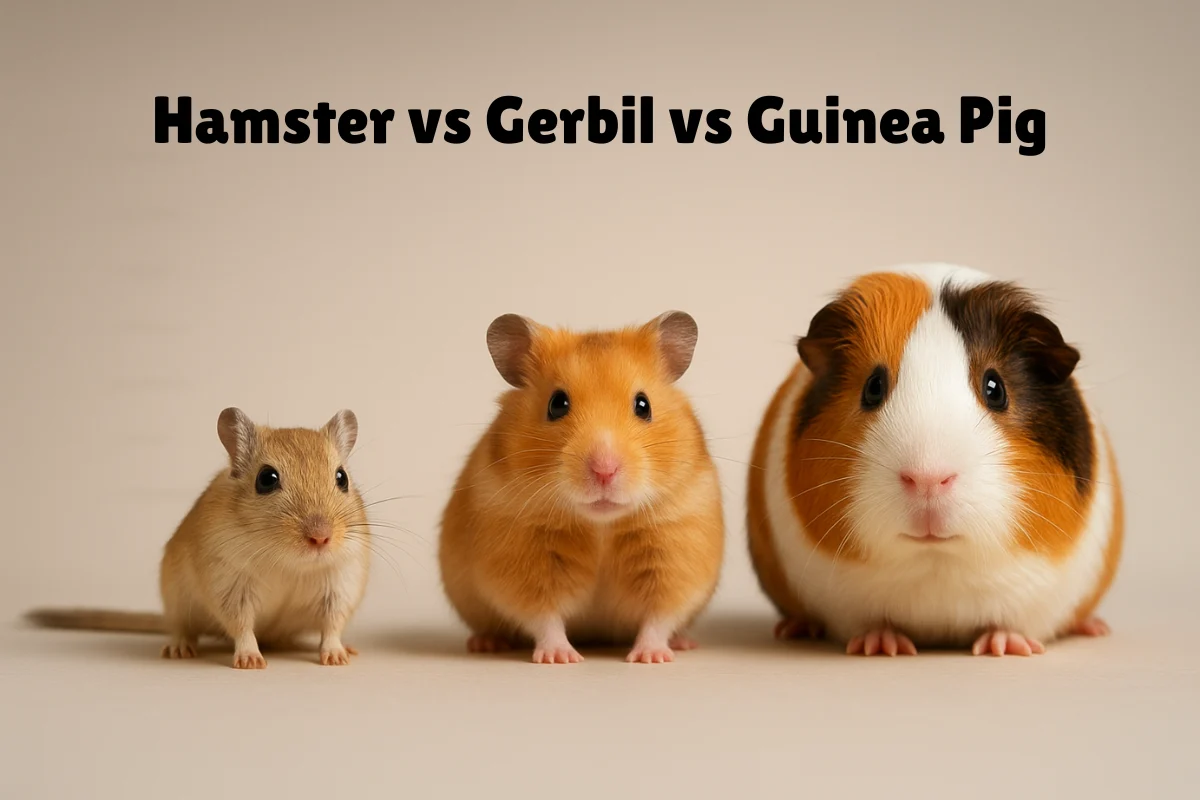
Thinking of adding a small furry friend to your home? Gerbils, hamsters, and guinea pigs are all popular starter pets—but they’re far from interchangeable. One of the biggest differences? Size.
And size doesn’t just affect how cute they look in your hand. It also impacts everything from housing needs and handling style to noise level, cleanup, and even personality.
Quick Size Breakdown
Here’s a quick glance at how these small pets measure up—from the tiniest floof to the biggest cuddle bug:
Hamsters — Smallest overall
- Dwarf hamsters:
🧍♂️ Length: 2–4 inches (5–10 cm)
⚖️ Weight: 1–2 ounces (28–56 g)
These are the tiniest of the group, with Roborovskis often staying under 2 inches! - Syrian hamsters:
🧍♂️ Length: 5–7 inches (13–18 cm)
⚖️ Weight: 4–7 ounces (113–198 g)
Bigger than dwarfs but still smaller than gerbils and guinea pigs overall.
Gerbils — Middle-sized
- 🧍♂️ Length (body + tail): 6–12 inches (15–30 cm)
⚖️ Weight: 2–4 ounces (56–113 g)
Gerbils are lean and agile, and their long tail adds to their total length.
Guinea Pigs — Biggest by far
- 🧍♂️ Length: 8–12 inches (20–30 cm)
⚖️ Weight: 1.5–2.6 pounds (700–1200 g)
Much bulkier than either gerbils or hamsters—these are true lap pets.
Size Ranking (Smallest ➜ Largest):
Dwarf Hamster < Syrian Hamster < Gerbil < Guinea Pig
If you’re choosing based on size—and how much space or care each needs—this order can help steer your decision.
Hamsters: Small but Not All the Same
Hamsters may all look pint-sized, but there’s a huge difference between species when it comes to size, behavior, and housing needs. Most pet owners will encounter two main types: dwarf hamsters and Syrian hamsters.
Dwarf Hamsters — Tiny, Fast, and Fun to Watch
Popular breeds include Roborovski, Campbell’s, and Winter White hamsters. They max out around 2–4 inches (5–10 cm) and weigh just 1–2 ounces. Roborovskis, in particular, are so small they can sit comfortably in a bottle cap!
What to expect:
- Adorable size—but very delicate to handle
- Extremely fast and squirmy, which makes hands-on interaction difficult
- Some species (like Campbell’s) can live in same-sex pairs—but it depends on personality and space
- Need at least 450+ square inches of continuous floor space, ideally in a tank with a mesh lid
💡 Best for patient owners who enjoy watching rather than cuddling. Not ideal for young kids.
Syrian Hamsters — Bigger, Calmer, and More Independent
Also known as “golden hamsters” or “teddy bear hamsters,” Syrians grow to 5–7 inches and weigh 4–7 ounces—twice the size of a dwarf, with a sturdier frame.
What to expect:
- Much easier to handle, especially for beginners or children
- Strictly solitary—they must be housed alone to avoid fighting
- Calmer temperament, usually easier to tame
- Require 600–800+ sq in of floor space and a large wheel (11″+) for exercise
💡 Great for first-time pet owners looking for a gentle, low-maintenance companion.
Gerbils: Long, Lean, and Social
Gerbils may fall in the middle size-wise, but they’re full of energy and personality. With slim bodies, long tails, and non-stop digging energy, gerbils are lively and engaging daytime pets.
Size Breakdown: More Tail Than You Think
Unlike hamsters or guinea pigs, gerbils have long tails that make them appear much bigger than they are.
- Body length: 4–5 inches (10–13 cm)
- Tail length: 3–5 inches (8–13 cm)
- Total length: 6–12 inches (15–30 cm)
- Weight: 2–4 ounces (56–113 g)
Their tails are fur-covered with a tuft at the end, used for balance. But they’re delicate—never pick a gerbil up by the tail, or it could break or shed.
Daytime Energy & Social Nature
Gerbils are diurnal (day-active) and highly social. They thrive in same-sex pairs or family groups if introduced young.
What makes gerbils special:
- Curious, alert, and fun to observe
- Love digging and tunneling—deep bedding is a must
- Less likely to bite than hamsters if well-socialized
- Typically non-aggressive when given space and enrichment
Habitat Needs: Designed for Burrowing
Most gerbil owners use a 20-gallon long glass tank or larger, filled with 6–8 inches of bedding for tunneling.
- Bedding: Paper or aspen (avoid cedar/pine)
- Accessories: Chew toys, tunnels, platforms, and sand baths
- Ventilation: Use a mesh lid for airflow
- Enrichment: Rotate toys and rearrange often—they’re natural problem-solvers
💡 Bonus: Gerbils often use a “toilet corner,” making spot-cleaning easier than with hamsters or guinea pigs.
Guinea Pigs: The Gentle Giants
If hamsters are tiny and gerbils are sleek, guinea pigs are the big, round softies of the group. With a mellow attitude and expressive vocalizations, guinea pigs make affectionate, engaging pets—but they come with greater size and care needs.
Size Breakdown: Big Pet Energy
Guinea pigs are substantially larger than gerbils or hamsters, and they feel it, too. They’re heavier, slower-moving, and much more vocal.
- Length: 8–12 inches (20–30 cm)
- Weight: 1.5–2.6 pounds (700–1200 g)
- Tail: None—just a plump, rounded body
- Build: Compact but bulky, with a low center of gravity
💡 Fun fact: Despite their size, guinea pigs are still considered “small animals,” but they often weigh 10x more than a Syrian hamster!
Highly Social and Talkative
Guinea pigs are herd animals—they’re happiest in pairs or groups. In fact, some countries legally require them to be kept with companions!
What to expect:
- Chatterboxes—they wheek, purr, rumble, and chirp
- Affectionate, but often shy at first
- Require more time and attention than hamsters or gerbils
- Much higher maintenance (more food, poop, shedding)
Big Space, Big Needs
Pet store cages usually aren’t big enough. Instead, use a C&C-style cage with fleece or paper bedding.
- Minimum for 2 pigs: 7.5 sq ft (30″ × 50″)
- Diet: Unlimited hay, vitamin C, and fresh vegetables
- Exercise: Floor time outside the cage is essential
💡 They don’t jump or climb much—flat floor plans work better than vertical setups.
Gerbil vs Hamster vs Guinea Pig: Size Comparison Table
| Pet Type | Body Length | Weight | Tail? | Housing Needs |
|---|---|---|---|---|
| Dwarf Hamster | 2–4 in (5–10 cm) | 1–2 oz (28–56 g) | No | 450+ sq in floor space |
| Syrian Hamster | 5–7 in (13–18 cm) | 4–7 oz (113–198 g) | No | 600–800+ sq in floor space |
| Gerbil | 6–12 in (with tail) | 2–4 oz (56–113 g) | Yes (long) | 20-gallon tank or similar |
| Guinea Pig | 8–12 in (20–30 cm) | 1.5–2.6 lbs (700–1200 g) | No | 7.5–10.5+ sq ft for 2 pigs |
Final Takeaway: Which Pet Fits Your Space and Lifestyle?
- Choose a hamster if you want a solo, low-maintenance pet with a small footprint.
- Pick gerbils if you want daytime-active, social pets and enjoy watching digging behaviors.
- Go for guinea pigs if you’re ready for a larger, cuddly companion that thrives on interaction and routine.
Each has its charm, and now that you know how their sizes (and care needs) compare, you’re one step closer to finding the perfect fit.