


Hamsters are fascinating little creatures, known for their curious nature and nocturnal habits. While humans are typically diurnal, hamsters are primarily nocturnal, meaning they are most active during the night. But how do they navigate in the dark?
- Are Hamsters Really Nocturnal? Or Just Night Owls in Disguise?
- A Closer Look: The Anatomy of Hamster Eyes
- Can Hamsters See in Total Darkness?
- Why Hamsters Developed Night Vision-Like Adaptations
- Hamster Vision vs. Human Vision: A Surprising Comparison
- Do Hamsters Suffer from Night Blindness?
- Hamsters Rely on More Than Just Sight at Night
- Lighting Tips for Hamster Owners
Are Hamsters Really Nocturnal? Or Just Night Owls in Disguise?
Most people call hamsters nocturnal, but the truth is a little more nuanced. Many hamsters are actually crepuscular, meaning they’re most active during the twilight hours—at dawn and dusk. That said, their energy often stretches into the nighttime, which is why your furry friend might sound like a tap-dancing tornado in their cage at 2 a.m.
In the wild, this activity schedule helps hamsters avoid predators and harsh temperatures. The dim light of early morning and late evening is their sweet spot—just bright enough for them to see, but dark enough to keep them safe. Their bodies and senses are finely tuned for these low-light conditions, especially their eyes.
A Closer Look: The Anatomy of Hamster Eyes
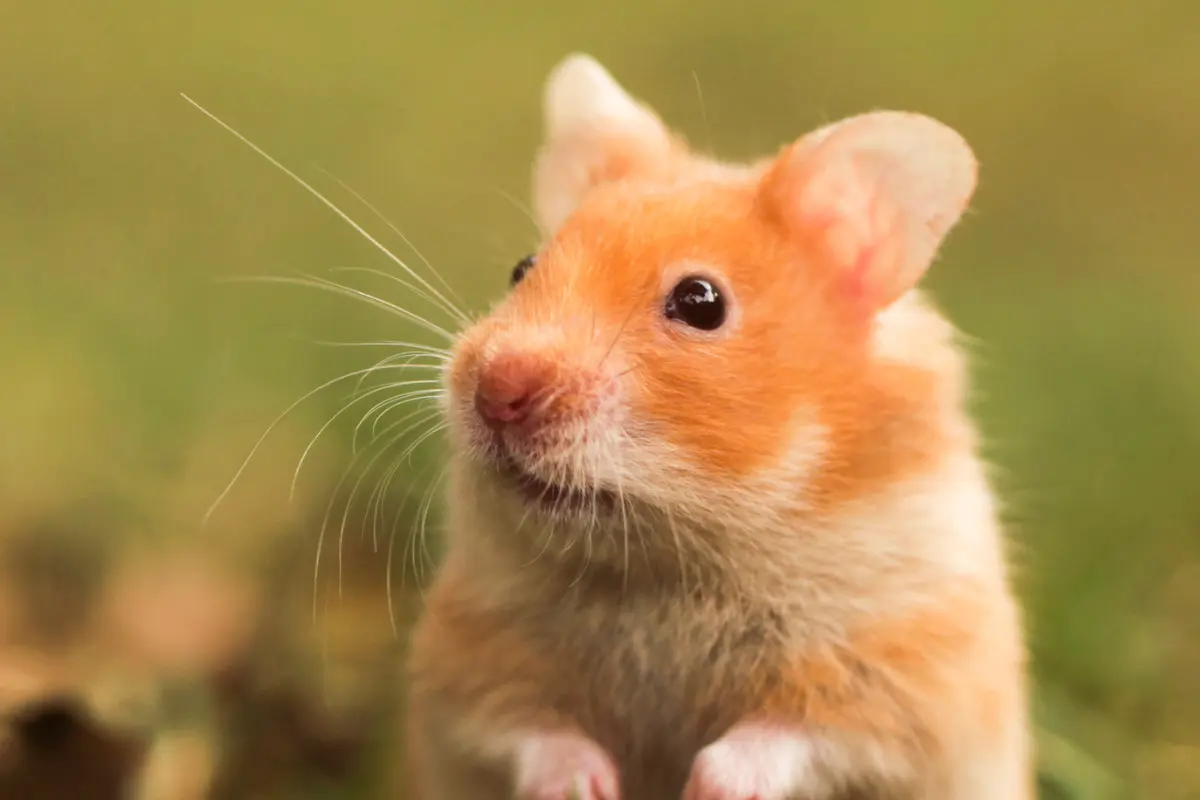
Let’s take a peek into those wide, glossy eyes. At first glance, hamster eyes might seem simple, but they’re built with some serious night-navigating power. Here’s what makes them so effective:
Rod Cells: The Unsung Heroes of the Night
Inside the retina at the back of the eye are photoreceptor cells—rods and cones. While cones help detect color and detail (what we humans rely on), rod cells specialize in light sensitivity. They don’t pick up color or fine resolution, but they can sense even the faintest changes in light and motion.
Hamsters have a high concentration of rod cells, which allows them to detect shapes, shadows, and movements in very dim environments. This is what gives them their reputation for having “night vision,” though it’s a bit different from what we usually mean by that term.
Retina: The Light-Detecting Canvas
The retina is a thin layer of tissue that lines the back of the eye. In hamsters, it’s particularly rod-dense. This setup makes their eyes extremely light-sensitive, especially in dim conditions. However, because there are fewer cone cells, their color vision and visual sharpness are limited.
Some studies suggest that hamsters can see shades of blue and green, but overall, their world is made up of muted tones and blurry edges. Detail doesn’t matter as much to them; being able to sense movement and light is far more useful in the wild.
Large Pupils: Built to Soak in Light
Another cool feature? Hamsters have large, round pupils that can widen dramatically in the dark. This helps them absorb more ambient light, much like how our pupils expand in a dark movie theater.
Unlike animals like cats or dogs, hamsters don’t have a tapetum lucidum, the reflective layer behind the retina that enhances night vision by bouncing light around. So while they don’t see well in pitch black, their large pupils and rod-rich retinas still give them an edge in low-light situations.
Can Hamsters See in Total Darkness?
Let’s clear up a common misconception—hamsters cannot see in complete darkness.
If the room is pitch black, their eyesight isn’t doing much of anything. That’s because their vision depends on at least a small amount of light—even moonlight or the faint glow from a hallway nightlight can be enough to help them get around. But without any light at all? They’re essentially blind and must rely on other senses.
So while hamsters are excellent at navigating at night, it’s not because they can see in the dark like cats. Instead, they combine low-light vision with a toolbox of other amazing senses.

Why Hamsters Developed Night Vision-Like Adaptations
In the wild, hamsters live in places where they’re often the prey, not the predator. Being active during the day would make them sitting ducks for birds, snakes, and other predators. So, nature gave them the ability to function in low-light conditions instead.
Many wild hamsters live in arid environments or underground burrows where sunlight barely reaches, so they’ve adapted to thrive in dim environments. Even domestic hamsters, generations removed from the wild, still retain these behaviors and sensory adaptations. It’s built into their biology.
Hamster Vision vs. Human Vision: A Surprising Comparison
Let’s break it down with a side-by-side look:
| Trait | Hamsters | Humans |
|---|---|---|
| Best lighting | Low light or dim settings | Bright, daylight conditions |
| Color perception | Limited (likely shades of blue/green) | Full color spectrum |
| Visual clarity | Poor (blurry, short-range vision) | High-definition detail and focus |
| Light sensitivity | Very high (lots of rod cells) | Balanced light sensitivity |
| Distance vision | Limited; may be farsighted | Good near and far sight |
| Dark adaptability | Strong, but ineffective in pitch black | Weak; we rely on artificial light at night |
So while hamsters beat us hands down when it comes to seeing in the dark, they’re not winning any awards for HD vision or color accuracy.
Do Hamsters Suffer from Night Blindness?
Not in the way humans do. Night blindness (or nyctalopia) is a condition where vision becomes extremely poor in dim light, often due to retinal disease or vitamin A deficiency. Hamsters, however, are born for low-light life.
That said, they can still experience vision problems, especially with age or injury. Conditions like cataracts, eye infections, or corneal injuries can reduce vision. White or albino hamsters, in particular, may have weaker eyesight and be more sensitive to bright lights.
If your hamster seems disoriented, bumps into cage items, or becomes overly cautious, it might be time for a vet check.
Hamsters Rely on More Than Just Sight at Night
Hamsters don’t see the world like we do—and they don’t need to. Their night navigation is a team effort involving several finely tuned senses.
🐭 Whiskers: Tiny Antennas That Sense the World
Hamster whiskers (called vibrissae) are long, stiff, and incredibly sensitive. They can detect subtle air currents and textures, helping hamsters:
- Judge distance.
- Avoid bumping into things.
- Sense obstacles and edges without seeing them.
These whiskers are especially helpful in dark tunnels or unfamiliar environments, acting like an invisible map of their surroundings.
👂 Hearing: Tuning into High Frequencies
Hamsters have excellent hearing, particularly in the higher frequency ranges. They can detect ultrasonic noises we can’t even hear. This sharp sense helps them:
- Hear approaching predators or movement.
- Recognize familiar voices or sounds.
- Navigate their habitat based on auditory cues.
Loud noises can stress them out, so it’s best to keep their space calm and quiet—especially during their sleep hours.
👃 Sense of Smell: A Nose That Knows Everything
Hamsters use their noses to:
- Find food (even if it’s buried).
- Mark and follow scent trails.
- Identify other hamsters or people.
Depending on the species, they have scent glands on their flanks or bellies that help them mark territory. This creates a kind of invisible breadcrumb trail that helps them navigate, even with limited vision.
Lighting Tips for Hamster Owners
Because your hamster sees best in low light, it’s important to create an environment that reflects that. Here’s what you can do:
- Avoid bright lights near their cage, especially at night.
- Use indirect or ambient lighting in the room if you’re active during their wake hours.
- Add hideouts and tunnels where they can escape light and feel secure.
- Stick to natural light cycles—let the day slowly transition to night without harsh interruptions.
If you’d like to check on your hamster during the night, consider using a dim red or amber light. These lights don’t interfere with their sleep-wake rhythm the way white or blue light does.